
Why Executive Order 14415 Turns Defense Supply Chain Compliance into Financial Risk
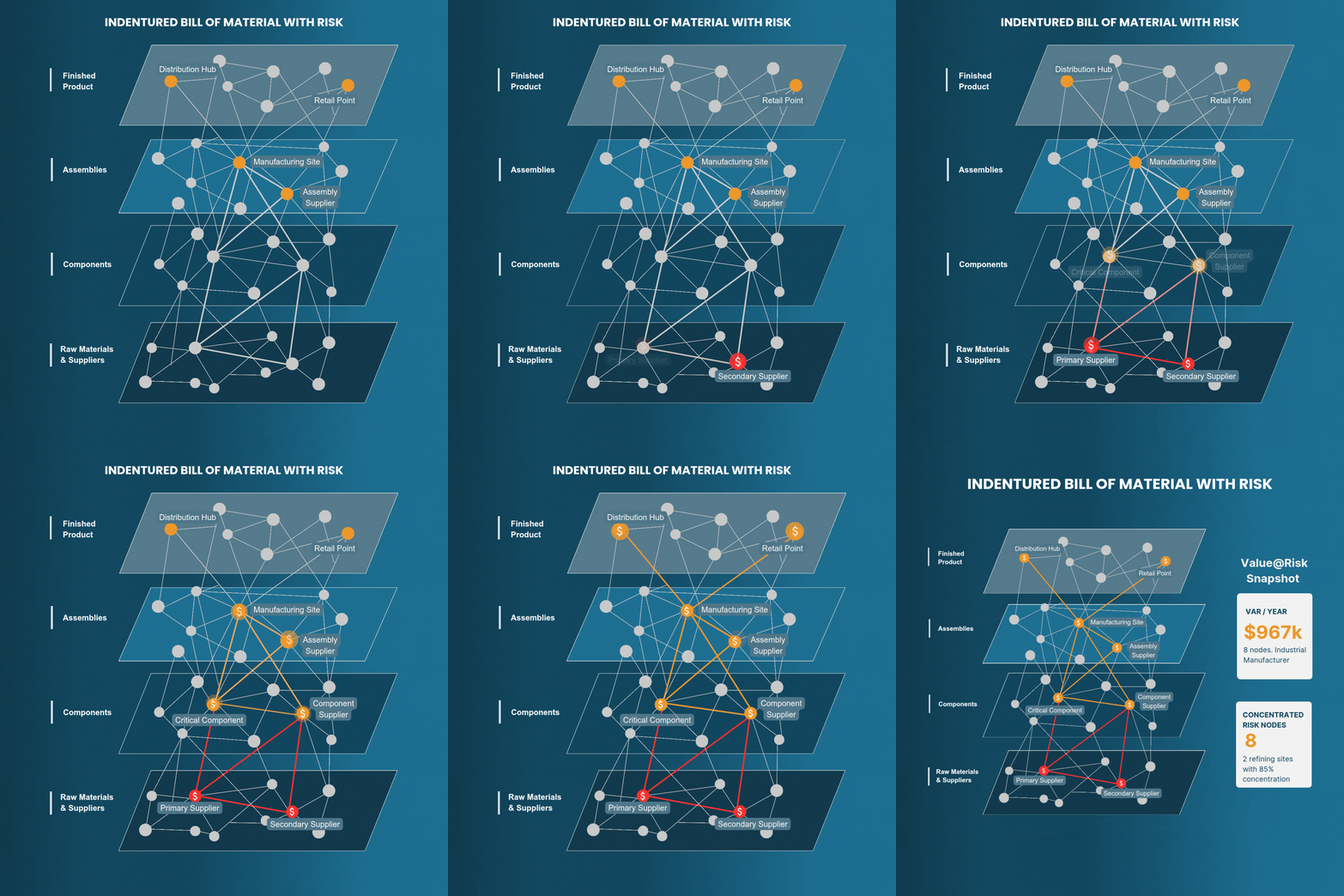
For manufacturing finance teams working on addressing Executive Order 14415 enforced by the Department of War (DOW), compliance extends beyond legal checklists, into direct threat to cash flow and working capital.
With the signing of Executive Order 14415, the rules governing defense supply chains have fundamentally shifted. The order targets hidden sub-tier vulnerabilities, clamps down on foreign-sourced critical materials, and phases out legacy non-availability waivers. If the existing Bill of Materials (BOM) relies on restricted sub-tier dependencies, then top-line revenue is exposed to sudden contract suspensions.
Defense contractors routinely leaned on "commercial nonavailability" waivers. Executive Order 14415 eliminates routine waivers effective January 1, 2027, unless an accepted, formal, and funded domestic transition plan is already underway. Suppliers counting on standard waivers to sustain production will find their legal authorization cut off at year-end.
The Financial Impact of Non-Compliance
Most finance teams have not mapped the cash flow contagion of a single non-compliant deep-tier supplier:
Instant Revenue Halts & Stop-Work Orders: Under EO 14415, primes cannot accept deliverables containing covered materials sourced from covered nations or unvetted foreign entities. A single flag will halt billings, freezes progress payments, and triggers stop-work orders, instantly impacting projected top-line cash inflows.
Trapped Working Capital in Unbillable Work-In-Progress: When a component is disqualified deep in the production cycle, semi-finished goods cannot be completed or shipped. The organization's liquid assets stay stagnant on the factory floor as stranded Work-in-Progress (WIP).
Inventory Write-Downs: Parts and subassemblies manufactured with non-compliant inputs lose all defense-commercial value overnight. Each accounted asset will become a non-recoverable, direct charge to Cost of Goods Sold (COGS), immediately diminishing EBITDA margins.
Emergency Re-Sourcing Requires Additional Capital: Discovering a restricted supplier during an audit forces emergency spot-market re-engineering and requalification. Expedited tooling & shipping, sudden vendor switching fees, and prime re-certification will decimate planned free cash flow.
Sustain360°: Audit-Ready Traceability

Under EO 14415, a supply chain blind spot is a financial liability.
Sustain360° Supply Chain Risk Intelligence bridges this gap, translating complex multi-tier supply chain data into quantifiable financial risk metrics. Instead of waiting for regulatory bottlenecks or failed audits, finance departments can use Sustain360° to operationalize compliance in three critical ways:
Quantifying Annualized Exposure: Convert single-source vendor risks and restricted-origin dependencies into concrete dollar figures to justify proactive mitigation budgets.
Optimizing Reshoring ROI: Model the capital expenditure (CapEx) versus operational expenditure (OpEx) tradeoffs of transitioning to domestic or allied-nation suppliers ahead of waiver expiration cliffs.
Protecting Working Capital: Avoid over-allocating funds to excessive safety stock by leveraging deep tier-mapping visibility to target leaner, compliant inventory buffers.
Assess Your Exposure to Executive Order 14415
The directive reflects a systematic, coordinated increase in federal procurement scrutiny. Organizations sourcing covered materials require verified supply chain documentation to support waiver and mitigation claims under current standards.
Book a Risk Assessment with Sustain360° to surface origin dependencies, identify traceability gaps, and evaluate compliance readiness before an enforcement action creates unforeseen urgency.

